Wildlife You Might See on Folly Beach
Wildlife You Might See on Folly Beach
Come to Folly Beach for the ocean views, sandy shores, and laid-back island atmosphere, and you may leave with a few unexpected wildlife sightings, too.
Folly sits where the Atlantic Ocean meets a winding network of salt marshes, tidal creeks, rivers, dunes, and inlets. Together, these habitats support an incredible variety of wildlife. Some species are easy to spot. Others require a little patience and a watchful eye.
While wildlife sightings are never guaranteed, here are a few of the wild neighbors you might meet during your next visit to Folly Beach.
Bottlenose Dolphins
Sometimes the first sign is simply a dorsal fin breaking the surface.
Bottlenose dolphins are a familiar sight in the waters around Folly Beach. Keep an eye on the ocean while walking the shoreline, or watch the Folly River and surrounding tidal creeks while kayaking, boating, or enjoying the view from the marsh side of the island.
These coastal waterways provide dolphins with access to fish and other prey. If you are particularly lucky, you may even witness strand feeding, a remarkable hunting behavior in which dolphins work together to push fish toward the edge of a muddy bank before briefly coming partially out of the water to catch them.
If dolphins make an appearance, enjoy the show from a respectful distance and let them remain wild.

Brown Pelicans
Few sights feel quite as coastal as a line of brown pelicans cruising above the waves.
These unmistakable birds are common along South Carolina’s beaches and estuaries, and Folly offers plenty of opportunities to watch them in action. You may see them gliding just above the ocean before suddenly climbing, folding their wings, and plunging into the water after fish.
Grab a spot on the beach, look toward the horizon, and there is a good chance the skies will provide some entertainment.
Loggerhead Sea Turtles
Some of Folly’s most beloved visitors arrive after dark.
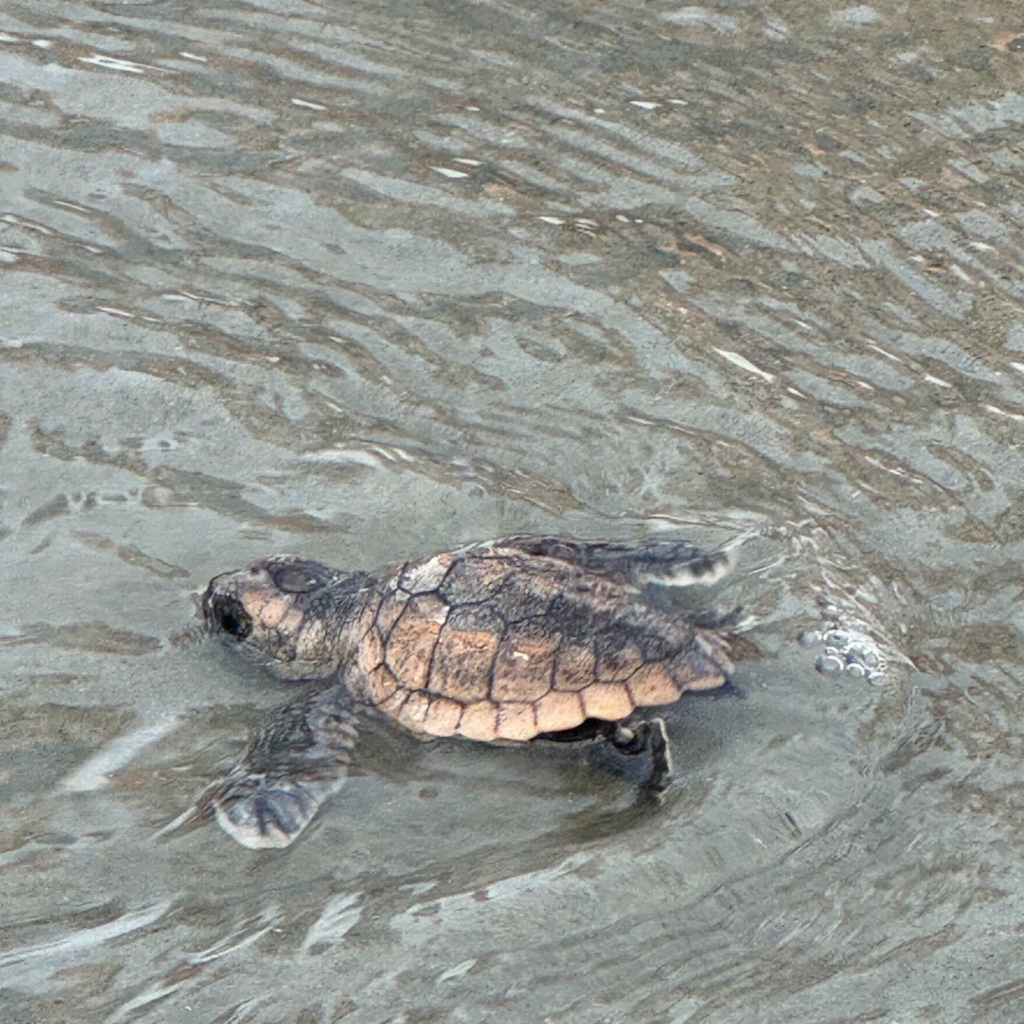
Loggerhead sea turtles return to South Carolina beaches to nest, and Folly Beach is part of that important coastal habitat. Local sea turtle season runs from May 1 through October 31, with nesting taking place earlier in the season and hatchlings emerging later in the summer and fall.
You do not have to see a turtle to appreciate their presence. Marked nests along the beach are a reminder that something remarkable is happening beneath the sand.
During turtle season, keep lights from shining onto the beach, avoid flash photography, fill in large holes before leaving, and always give turtles and marked nests plenty of space.
Shorebirds Along the Sand
The birds of Folly Beach deserve more than an occasional glance toward the sky.
American Oystercatchers, Willets, Least Terns, Wilson’s Plovers, and many other species use the island’s beaches, mudflats, inlets, and marshes throughout the year.
Both ends of Folly offer particularly rewarding birding opportunities. Lighthouse Inlet and the Maritime Forest on the north end provide important coastal habitat, while Folly Beach County Park and nearby areas on the south end attract another impressive variety of birds.
If you encounter a flock resting or feeding along the shoreline, give them room and enjoy the view from a distance.

📸: Robert Anderson (on FB)
Ghost Crabs Underfoot
Not all of Folly’s wildlife flies overhead or swims offshore.
Look closely at the sand, especially higher up the beach, and you may notice small holes leading underground. Some belong to Atlantic ghost crabs, quick-moving beach residents that spend much of their time inside sandy burrows before emerging to forage.
Their pale coloring and speedy sideways scurrying make them easy to understand once you hear the name. Spotting one before it disappears back into the sand can become a small highlight of a beach walk.
Life in the Salt Marsh
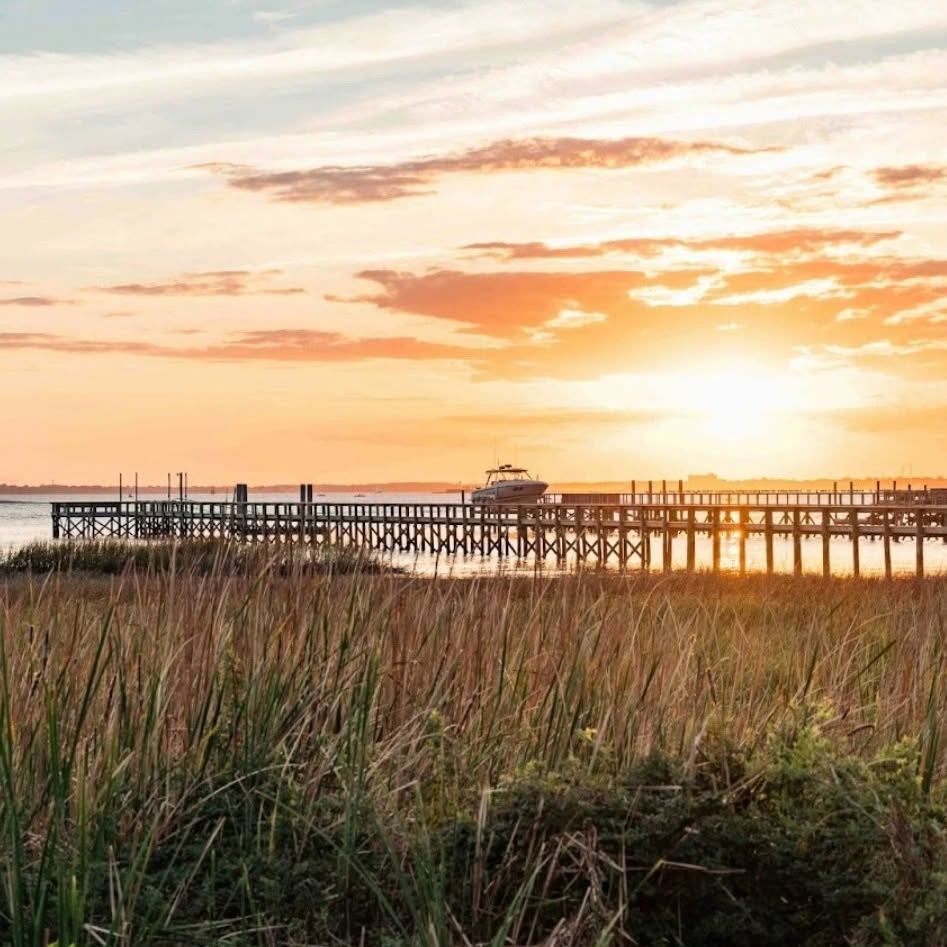
Turn your attention from the ocean to Folly’s marsh side, and the wildlife changes again.
The salt marsh and tidal creeks surrounding the island create habitat for fiddler crabs, blue crabs, oysters, shrimp, fish, herons, egrets, ospreys, and countless other species. Lucky observers might even encounter a diamondback terrapin, a turtle specially adapted to life in estuarine environments.
The view changes throughout the day as the tides rise and fall, revealing mudflats and oyster beds before covering them again with water.
That constant movement is part of what makes Folly so alive.

📸: Robert Anderson (on FB)
Share the Island
One of the best things about visiting Folly Beach is never knowing exactly what you will see.
Maybe it will be a dolphin surfacing in the river, a pelican diving offshore, a tiny shorebird racing along the waterline, or a ghost crab disappearing into the sand.
Slow down, look around, and enjoy the wild side of the Edge of America. Just remember that this beautiful island is their home, too. Give wildlife space, respect protected areas, pack out what you bring in, and help keep Folly wild for everyone who calls it home.