
The Story of the Morris Island Lighthouse
The Story of the Morris Island Lighthouse
Some landmarks feel tied to the land around them.
Others feel shaped by time itself.
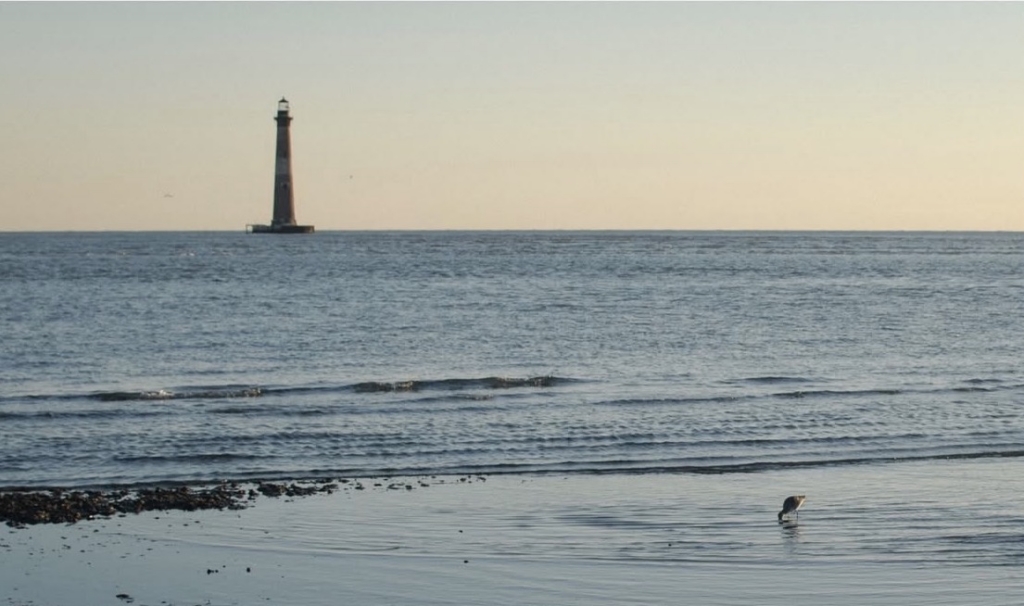
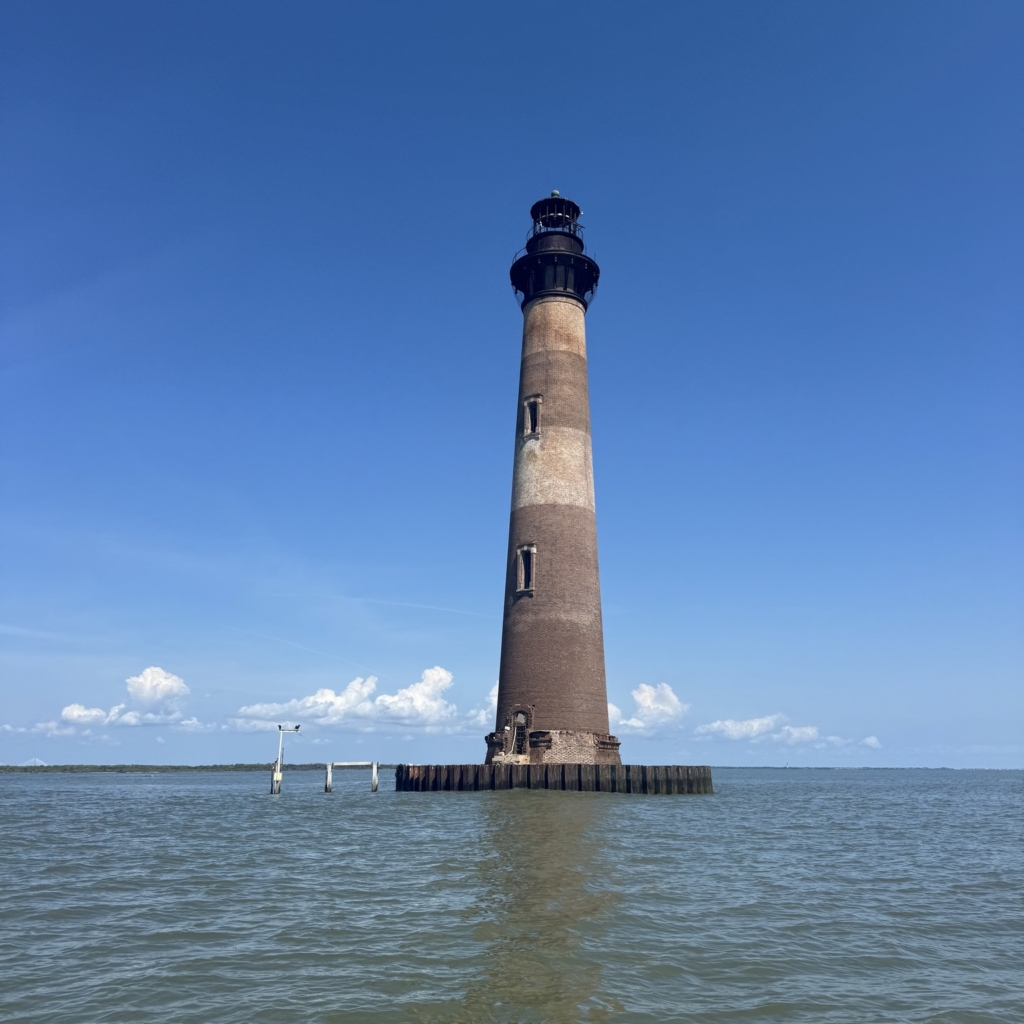
Just off the northeastern end of Folly Beach, the Morris Island Lighthouse stands alone in the surf. The 161-foot brick tower rises from the water like a quiet reminder of the Lowcountry’s long relationship with the sea.
Today, it is one of the most photographed sights near Folly Beach. But the lighthouse tells a deeper story than a single view.
It is a story of navigation, storms, shifting shorelines, and a coastline that never stays the same for long.
A Beacon for Charleston Harbor
Long before the current lighthouse stood offshore, the entrance to Charleston Harbor was one of the most important shipping routes in the American colonies.
In 1767, the South Carolina colony built the first lighthouse on Morris Island to guide ships safely through the harbor entrance. Charleston was already a major port, and the light became a vital navigational marker for vessels approaching the coast.
After the American Revolution, responsibility for many colonial lighthouses passed to the federal government. As shipping traffic grew, the original tower was replaced in 1838 with a stronger lighthouse designed to better serve the busy harbor.
Even then, the coastline was constantly changing.
What stood firm one decade could look very different the next.
War, Storms, and a New Lighthouse
During the Civil War, Morris Island became a strategic military site. In 1862, Confederate forces destroyed the lighthouse while retreating to prevent it from aiding Union ships entering the harbor.
After the war, the need for a reliable harbor light remained.
Construction of the current Morris Island Lighthouse began in the 1870s, and the new brick tower was completed in 1876. Standing 161 feet tall, it became the tallest lighthouse in South Carolina.
The tower soon faced challenges from the coast itself.
An intense cyclone damaged the structure in 1885, and the Charleston earthquake of 1886 caused additional cracks that required repairs. Even with those setbacks, the lighthouse continued guiding ships into the harbor for decades.
For generations of sailors, it was the first sign they were nearing Charleston.
When the Shoreline Began to Move
When the present lighthouse was built in 1876, it stood well inland on Morris Island. Historical accounts estimate it was more than 1,000 feet from the ocean.
Over time, the shoreline began to retreat.
A major turning point came with the construction of the Charleston Harbor jetties in the late nineteenth century. These long rock structures improved navigation by stabilizing the harbor entrance, but they also changed the way sand moved along the coast.
As currents shifted, Morris Island slowly began to lose land.
By the early twentieth century, waves had reached the lighthouse itself. By 1938, the tower stood at the water’s edge.
Today, the lighthouse sits offshore in the Atlantic, surrounded by waves where dunes and shoreline once existed.
It is one of the most visible reminders of how dynamic barrier island coastlines can be.
The Light Goes Dark
For nearly a century, the Morris Island Lighthouse guided ships through the harbor entrance.
But technology eventually changed how navigation worked.
In 1962, the lighthouse was officially decommissioned and replaced by a modern light installed on the nearby Sullivan’s Island Range Lights. The historic tower was no longer needed for navigation.
Three years later, the property passed out of federal ownership.
The lighthouse remained standing, but its future was uncertain.
Saving the Lighthouse
In the 1990s, a grassroots preservation effort began to protect the structure from further deterioration.
The nonprofit organization Save the Light purchased the lighthouse in 1996 to stabilize the historic tower and ensure its long-term survival. Restoration efforts helped reinforce the structure and preserve the lighthouse as a cultural landmark.
Ownership of the lighthouse was later transferred to the State of South Carolina, but preservation efforts continue today.
Because of its offshore location and fragile condition, the lighthouse is not open to the public.
That distance has become part of its character.
Visitors experience it the same way generations of sailors once did. From afar.
Seeing the Lighthouse Today
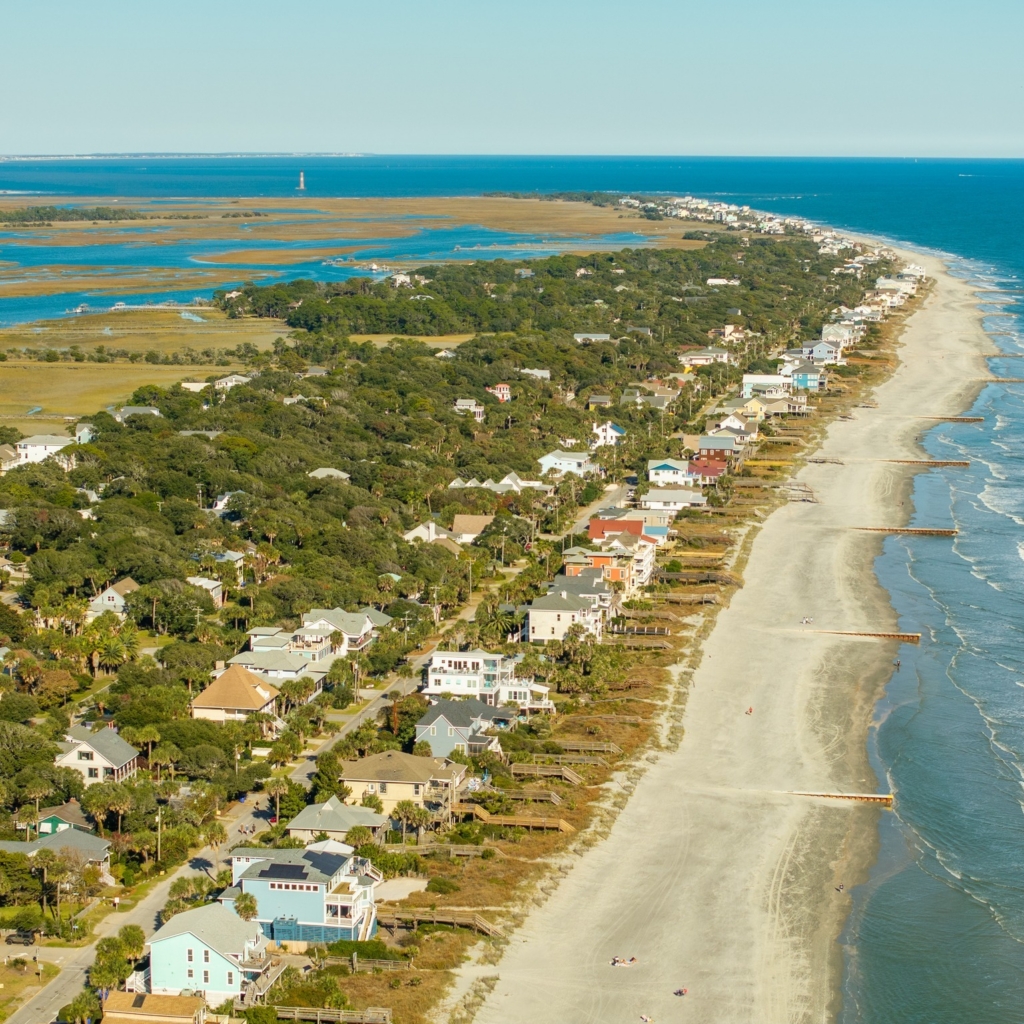
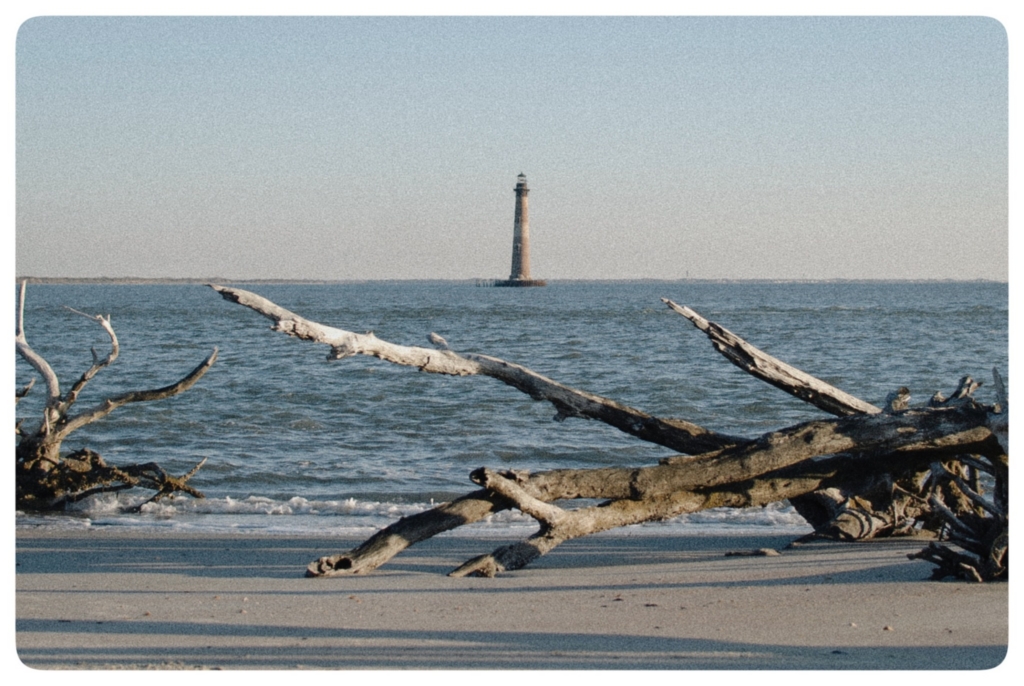
One of the best places to view the Morris Island Lighthouse is from the northeastern end of Folly Beach near the Lighthouse Inlet Heritage Preserve.
The walk to the inlet feels quiet and open, with wide views of the water and marsh. As you reach the shoreline, the lighthouse appears offshore, rising above the waves.
Photographers often visit at sunrise or sunset, when changing light gives the tower a different character every time.
Some days it stands against calm water and soft skies.
Other days, the wind and tide surround it with surf and motion.
Boat tours in the Charleston area also pass near the lighthouse, offering another perspective from the water.
A Landmark Shaped by the Sea
The Morris Island Lighthouse was never meant to stand in the ocean.
The sea moved around it.
Storms reshaped the shoreline. Currents carried sand away. Barrier islands shifted the way they always have along the Atlantic coast.
What remains is not just a historic structure, but a symbol of how coastal landscapes change over time.
For many visitors to Folly Beach, the lighthouse becomes part of the memory of the place.
A quiet tower on the horizon.
A reminder that the coast is always evolving.
And a landmark that continues to watch over the entrance to Charleston Harbor.
Related Articles
Related Posts


Peaceful & Beautiful
This was my families first time at the ocean and I will never forget the look of joy on my youngest daughter’s face the moment the waves first came up on her feet. The beach was not over crowded, was clean, and was great for relaxing, swimming, and collecting seashells. There is a long pier for fishing off of and it is a beautiful sight at night. The town atmosphere was a nice mix between relaxing and having a good time and can work for the over 21 crowd as well as for families with small kids. There are plenty of great food stops and cute shops.
Fantastic & Peaceful
This beach is very relaxing and a great place to chill out. We saw several dolphins and enjoyed walking on the fishing pier. I would consider staying on the beach here next time we are in Charleston instead of downtown.
Cute, Calm & Peaceful
First time visitor to Folly Beach–loved it! Quiet and peaceful with many trees left on island.