
Surf Culture and the Soul of Folly Beach
Surf Culture and the Soul of Folly Beach
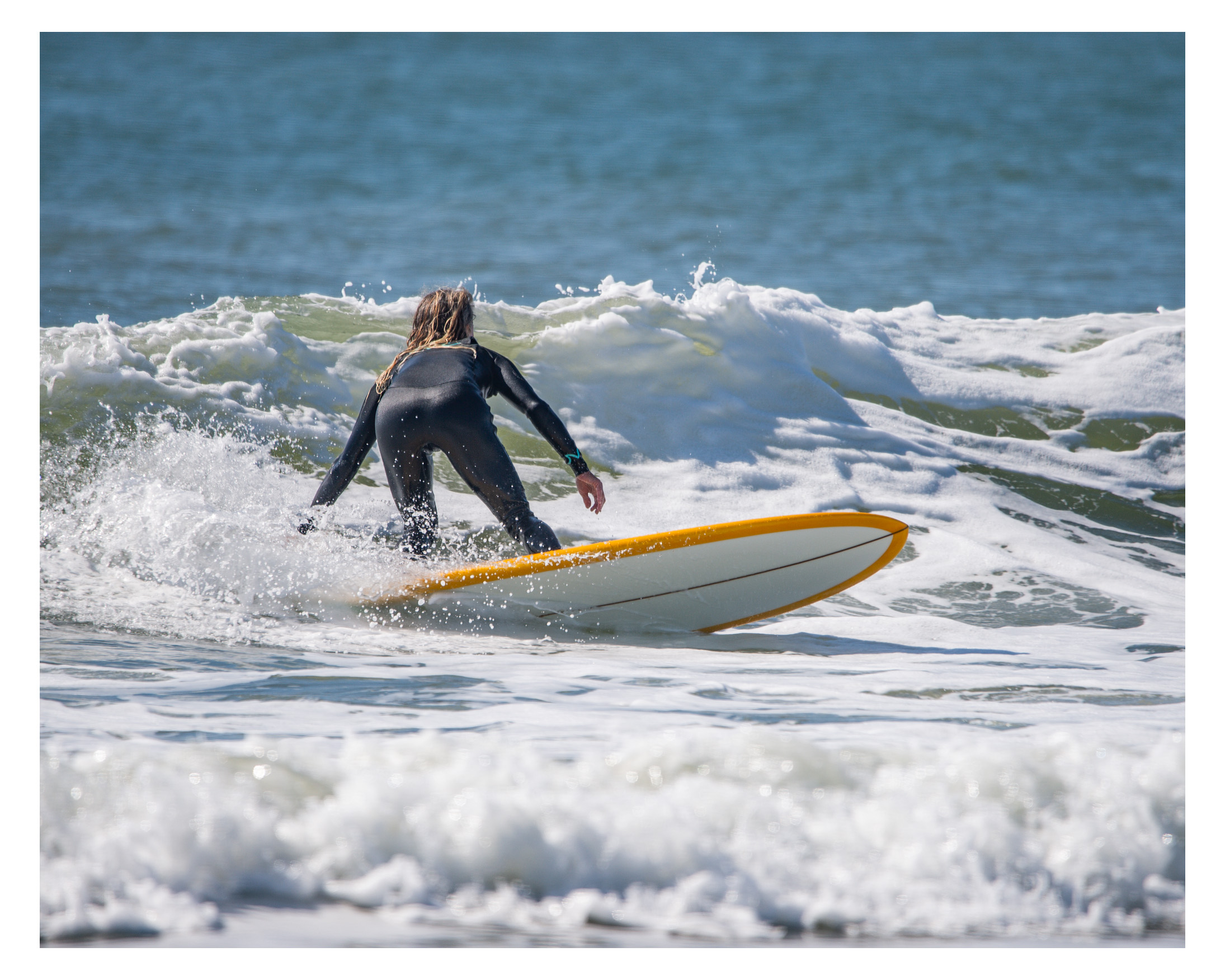
On any given morning at Folly Beach, the ocean has an audience.
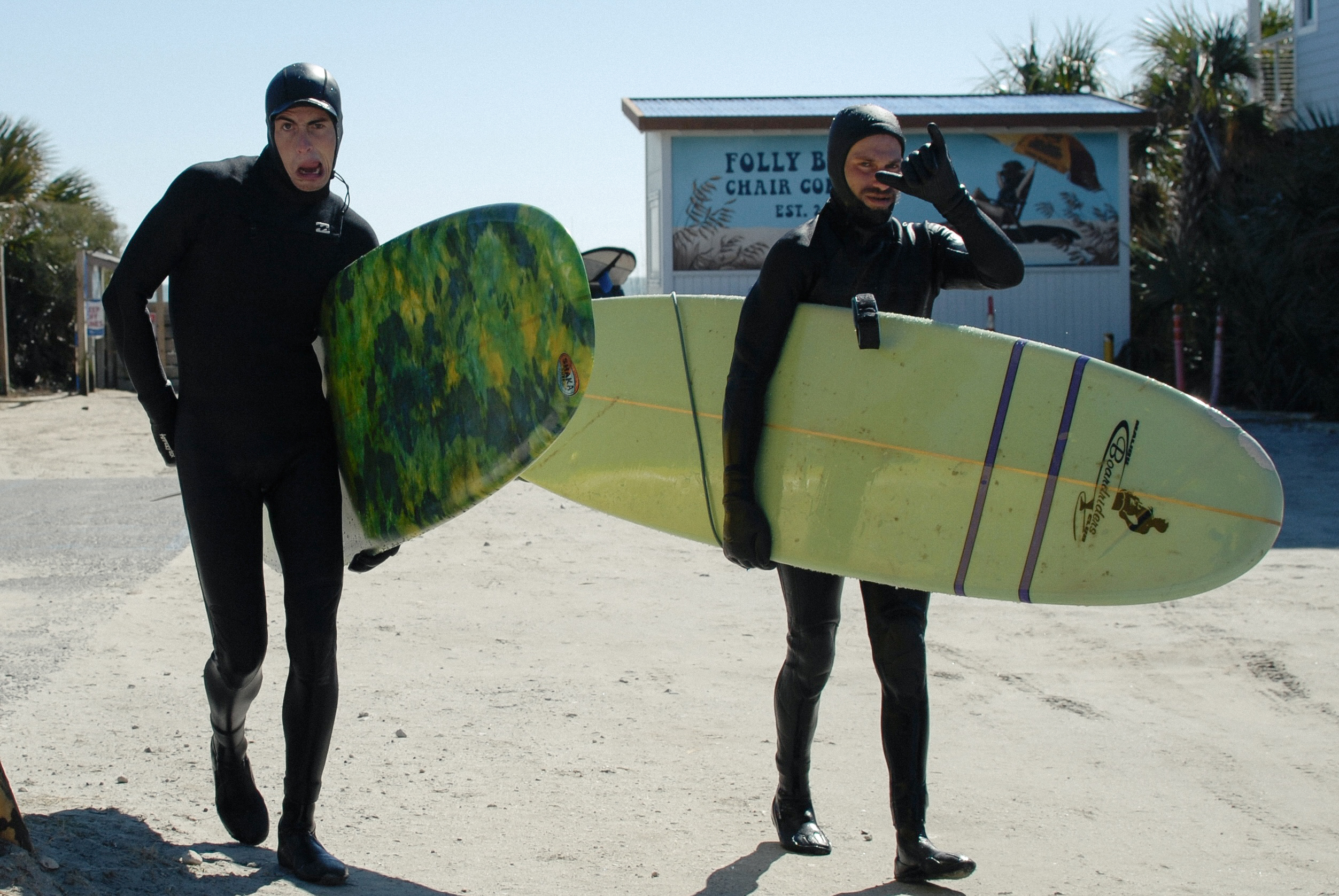
Surfers pause near the shoreline with boards tucked under their arms, watching the water before deciding where to paddle out. Others check the waves from bicycles, golf carts, and sandy beach paths. Wetsuits hang over porch railings. Surfboards are stacked outside local shops and strapped to the roofs of cars heading toward the Washout.
These everyday scenes reveal something important about Folly Beach. Surfing is not simply an activity people come here to try. It is part of the island’s rhythm, history, and personality.
For more than six decades, surfing has helped shape Folly’s reputation as a place that values independence, creativity, community, and a close relationship with the ocean. The waves may change from one day to the next, but the culture that has grown around them has become one of the island’s most enduring traditions.
📸: @anthonyosment (on IG)
When Surfing Found Folly
The beginnings of Folly Beach’s modern surf culture can be traced to the early 1960s, when surfing was becoming increasingly visible across the United States.
Movies, music, and images from California introduced young people throughout the country to a sport that seemed to represent freedom, adventure, and life organized around the sea. On Folly, local teenagers began to wonder whether the island’s own waves could be ridden.
According to the Folly Beach Historical Society, a pivotal moment came in 1963, when a teenager named Foster Folsom watched an airman paddle into a small wave near the pier. The surfer is believed to have been a West Coast serviceman known as “Sarge” Bowman.
At a time when some people doubted that Folly’s waves were suitable for surfing, that short ride offered proof.
West Coast airmen stationed in the Charleston area are credited with helping introduce local teenagers to surfboards, techniques and the basic knowledge needed to get started. Before long, a small community began to form around the shared excitement of riding Folly’s waves.
The equipment was not easy to find. Surfboards were expensive, and few local families owned one. Early surfers often shared boards, taking turns in the water before passing the board to the next person waiting on shore.
That spirit of sharing became part of the foundation of Folly surf culture.
Among those early surfers was Pat Thomas, who is recognized by local historians as the first woman to surf on Folly and the first woman on the island to own a surfboard. She reportedly purchased her board with money earned while working at Smoak’s Float Stands and allowed other young surfers to use it.
Before surf culture had established businesses, competitions or official organizations, it grew through friendship, curiosity and a willingness to help one another experience the water.

📸: @anthonyosment (on IG)
More Than a Surf Shop
As the local surf community grew, it needed places to gather.
In 1965, Dennis McKevlin and his son Ted opened what would become McKevlin’s Surf Shop. The original operation began in a small storage space connected to the Folly Bowling Center. Early offerings were simple, including pieces of surf wax cut from paraffin blocks and food for hungry surfers.
Surfboards often had to be ordered from California, which made the shop an important link between Folly’s developing surf scene and the larger American surf industry.
McKevlin’s would become far more than a place to buy boards and equipment. It served as a meeting point, information exchange, and informal clubhouse for generations of surfers.
Other businesses followed, including Dewey’s Surf Shop, the Surf Shack, Eastern Surf Shop, the Wave Machine, Natural Arts Surf Shop, and Ocean Surf Shop. Each contributed to the growth of the island’s surf identity.
These shops helped new surfers learn where to begin. They connected visitors with locals, sponsored teams and competitions, and offered places where stories and conditions could be discussed long after everyone had left the water.
Some also provided practical support that reflected the community’s informal nature. The Surf Shack, opened by the Mauldin family in 1968, gave surfers without cars a place to store their boards. Jane Mauldin, whose family also operated Dewey’s Surf Shop, became known as the “mother of surfing on Folly Beach.” She made surf shorts, prepared food and helped create a welcoming gathering place for young surfers.
The earliest surf shops were businesses, but they were also community institutions. Their influence reached well beyond the items on their shelves.
Clubs, Contests and Cold-Water Commitment
By the middle of the 1960s, surfing on Folly had grown from a small group of friends into an organized community.
The West Coast East Surf Club formed in 1965 and sponsored Folly’s first known surf contest the following year. Competitions allowed local surfers to test their skills, meet riders from other beaches and become part of the larger East Coast surf scene.
In 1969, McKevlin’s sponsored an invitational surfing meet near the old Plaza pavilion. The competition attracted 95 entrants, an impressive turnout for a surf community that had been almost nonexistent only a few years earlier.
The January water was approximately 50 degrees, but the cold did not discourage the competitors.
The Palmetto Surf Club also formed in 1969, helping establish a stronger structure for contests, teams and community organization.
These clubs gave Folly surfers a collective identity. They also proved that surfing had become more than a passing trend. It was becoming part of the island’s social fabric.

📸: @anthonyosment (on IG)
The Fight for Space in the Water
Folly’s surf history is not only a story of carefree days and friendly competitions. It is also a story of community advocacy.
As surfing became more popular, local officials began limiting where surfers could enter the water. Folly Beach passed its first motion restricting surfing areas in 1965.
By 1972, surfers were confined to an eastern section of the island then known as the Stumps, an area associated today with the Washout. The location had been shaped by erosion, which exposed old pilings, tree stumps, concrete foundations and remnants of a former roadbed.
Concentrating surfers into one limited area created crowding and safety concerns. Local surfers responded by organizing, attending meetings and challenging the restrictions.
With support from the Eastern Surfing Association, the dispute eventually became a federal civil-rights case. In 1976, a summary judgment was issued against the city, and the location restrictions were lifted. A new ordinance also incorporated a surfboard leash requirement, balancing access with safety.
Another proposed ban at the Washout surfaced in 1995. Once again, surfers organized, and the proposal was dropped.
This chapter of Folly’s history reveals an important side of its surf culture. The community may have been laid-back, but it was never passive.
Surfers were willing to work together, participate in civic life and defend reasonable access to the ocean. Their efforts helped preserve surfing as a lasting part of Folly Beach.
📸: @anthonyosment (on IG)
The Washout Before and After Hugo
Today, the Washout is one of Folly’s most recognizable surf locations.
It is sometimes said that Hurricane Hugo created the Washout when the storm struck the South Carolina coast in 1989. The history is more complicated.
Surfers were already using the eastern stretch of beach decades before Hugo, and historical records place them there by the early 1970s. The storm did, however, dramatically reshape the surrounding landscape and strengthen the area’s exposed character.
Hugo became part of the Washout’s modern story, but not its beginning.
That distinction reflects something larger about Folly Beach. The island is always changing. Storms reshape the shoreline. Sandbars shift. Familiar buildings and paths may disappear. The waves that arrive one week may look completely different the next.
Surfing requires attention to those changes. It teaches patience, adaptability, and respect for conditions that cannot be controlled.
Those same qualities have helped Folly remain resilient through storms, development pressures, and the passage of time.
Women in the Water
Women have been part of Folly surf culture from its earliest years.
Pat Thomas helped establish that history in the 1960s. In the years that followed, Nanci Polk Weckhorst became one of Folly’s most accomplished competitive surfers.
She is recognized as the first professional surfer from Folly Beach and the first professional surfer from South Carolina, male or female. Her competitive achievements included tying for first at the 1972 Eastern Surfing Association nationals and placing second in one of the earliest professional women’s contests on the East Coast.
That legacy continues through the Folly Beach Wahine Classic, which brings women and girls of different ages and experience levels together at the Washout.
The event celebrates competition, but it also emphasizes encouragement, confidence, and community. It reflects a surf culture that continues to grow by making room for new generations of athletes.

📸: @anthonyosment (on IG)
A Culture Passed Down
The soul of Folly surf culture is most clearly found in the way knowledge is shared.
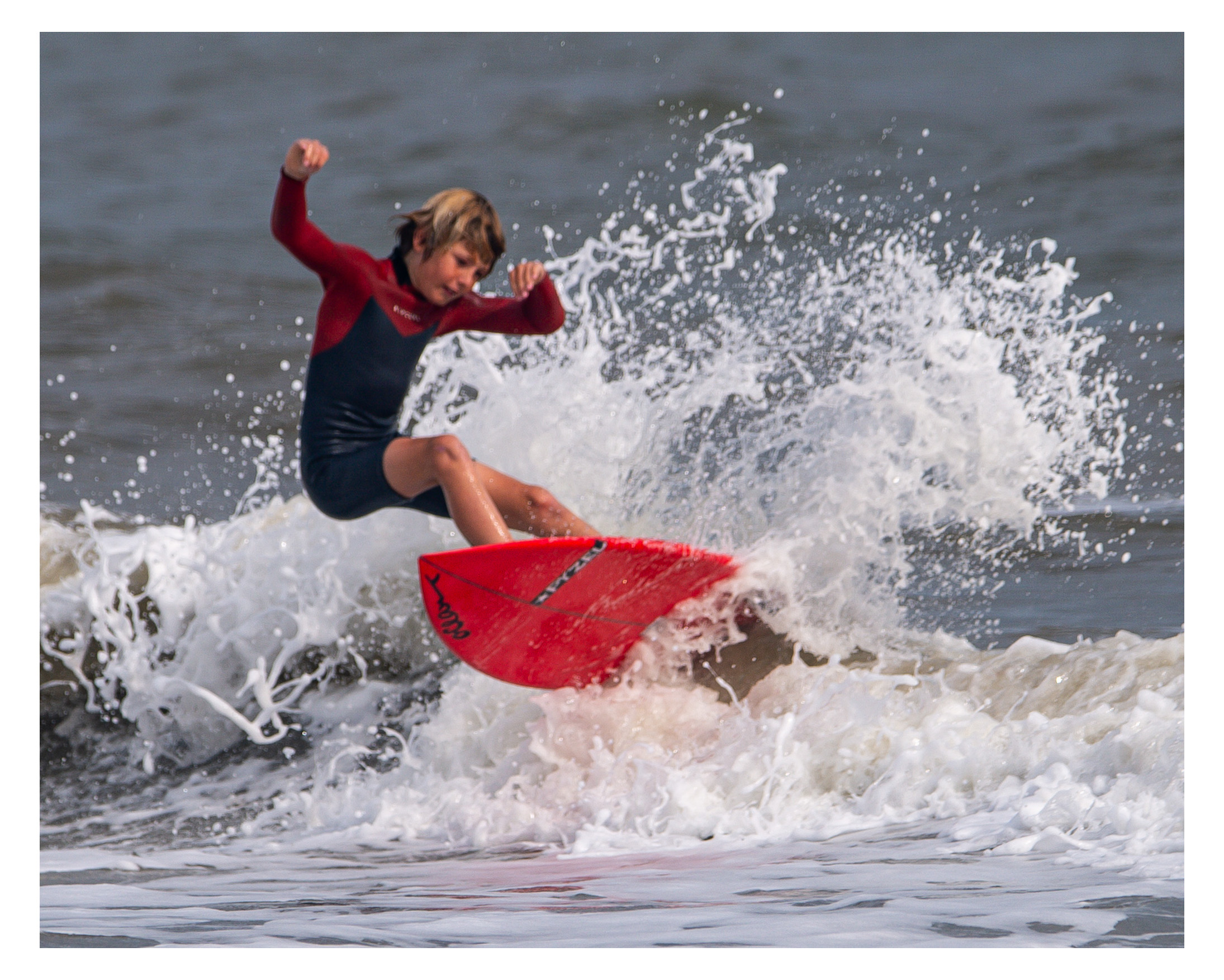
Experienced surfers teach younger riders how to read the water, wait for a wave, and respect the people around them. Families pass traditions from one generation to the next. Local shops continue to introduce newcomers to the sport while supporting those who have spent decades in the water.
Longtime Folly surfers are remembered not only for their contest results but also for their mentorship and generosity.
That sense of connection extends beyond surfing itself. The community has used competitions, events, and organizations to support charitable causes, environmental stewardship, veterans, children, and other groups.
Surfing may begin as one person and one board meeting a wave, but on Folly, it has always grown into something more communal.
The Spirit Beyond the Waves
Surfing did not single-handedly create the personality of Folly Beach.
The island has also been shaped by fishing families, musicians, artists, business owners, longtime residents, and generations of visitors. Still, surfing has become one of the clearest expressions of Folly’s independent spirit.
It can be seen in the island’s relaxed pace, its locally owned shops, and its willingness to remain a little different from other coastal destinations.
Folly never needed perfect waves to build a meaningful surf culture. Generations of surfers took the conditions the island offered and created something lasting.
They shared boards, opened shops, formed clubs, organized contests, challenged restrictions, and mentored the people who came after them.
Today, every board carried toward the water becomes part of that ongoing story.
The waves are never exactly the same, and neither is Folly. Yet the connection between the island, its people and the ocean remains at the heart of what makes this place feel like nowhere else.
📸: @anthonyosment (on IG)