
April Fishing Report from Folly Beach with Capt. Gates
April Fishing Report from Folly Beach with Capt. Gates
April arrives quietly on Folly, but the water knows the season has changed.
The marsh begins to move again. Shorebirds return to the mudflats. The tide carries more life through the creeks. Anglers start paying closer attention to the structure, the bait, and the rhythms that define spring in the Lowcountry.
Local charter captain Capt. Gates spends most of his days watching these changes unfold from the water. Each month, he shares what he is seeing across the marsh, the estuary, and the nearshore reefs.
Here is his April fishing report from Folly Beach.

From the Water with Capt. Gates
As April sets in, the salt marsh is coming to life.
One group of animals that really livens up the landscape is the shorebirds. Yellowlegs, black-bellied plovers, dunlins, dowitchers, oystercatchers, and red knots work the sand and mudflats at low tide, filling the soundscape with their calls.
Whimbrels, with their long, decurved bills, have arrived from the southern Caribbean and northern South America. They are on their way to breeding grounds in Canada, and they have stopped for a fuel break in one of the most bioproductive ecosystems on the planet.
They arrive skinny, their fat reserves burned up on the last leg of their journey. Through April, we will see them working the mudflats with the other shorebirds, using that long, sickle-shaped bill to pull critters out of their muddy lairs.
And there is perhaps no critter more densely populated than the fiddler crab.
They populate the high marsh with a mind-boggling density, with hundreds of thousands occupying an acre of habitat. This time of year, in the warm spring air, you can gaze across the exposed flats and see the males using their oversized claw for the only thing it is really good for, waving to female fiddler crabs.
A pint of these quarter-sized crabs will set you back about $22 at the bait shop. Their purple and blue shells give them the nickname “chinabacks,” and this is the time of year they are in high demand as anglers target sheepshead over structure.
Some of that structure is part of the artificial reef system just off our coast. Other pieces sit quietly inshore in protected waterways.
April is prime time for sheepshead. They move around these structures gnawing at barnacles, oysters, mussels, small crabs, and grass shrimp with their strange, humanlike teeth. And sheepshead, like the whimbrels, love fiddler crabs too.
Speaking of crabs, softshell crabs are in season.
Every seafood market is carrying them, and every restaurant is serving them. When folks ask what they should order at a seafood restaurant this time of year, there is really only one answer.
Softshell.
While commercial crabbers work their peeler traps to supply hungry seafood lovers, it seems every fish in the estuary is also focused on one thing.
Crustaceans.
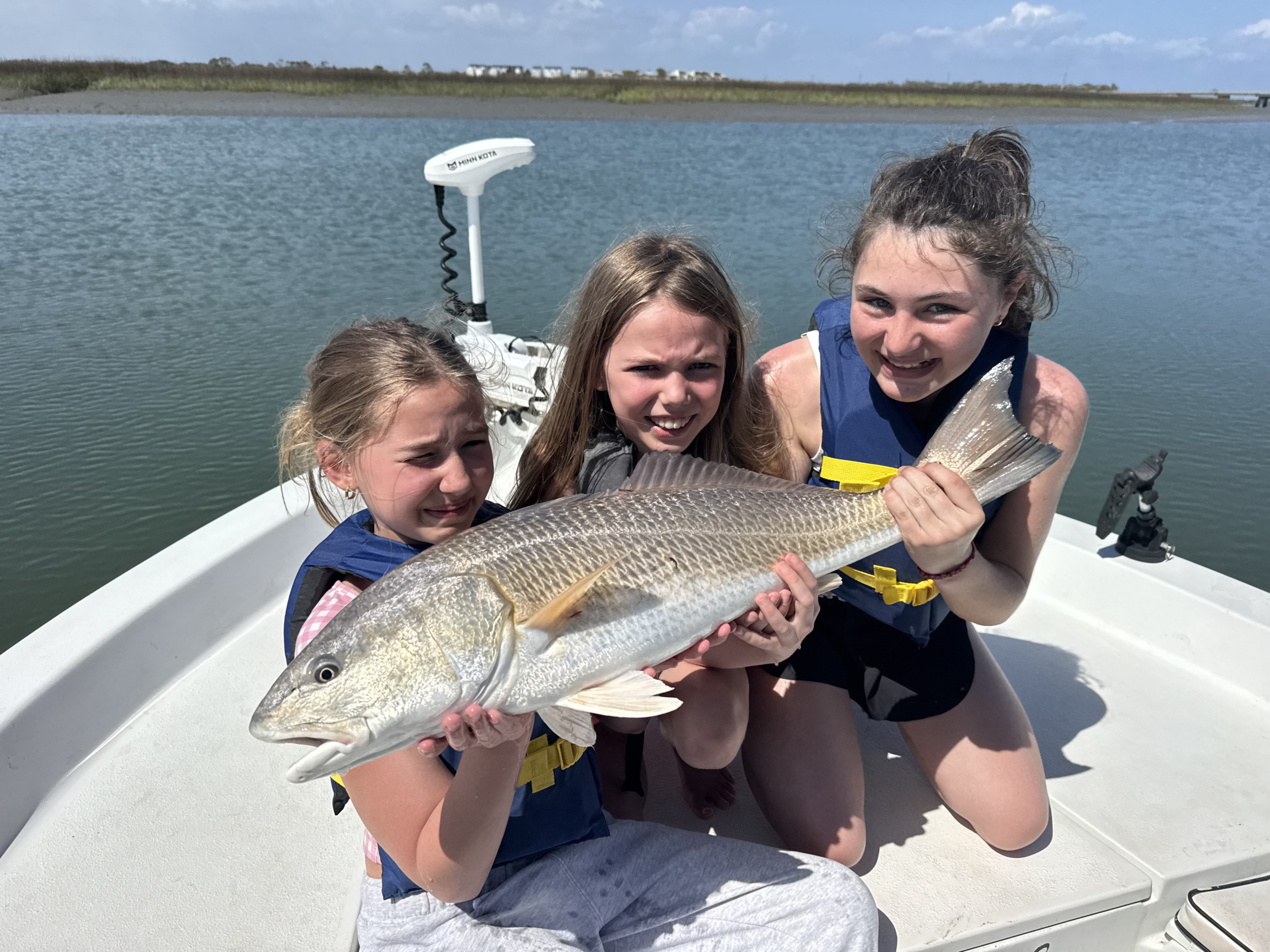
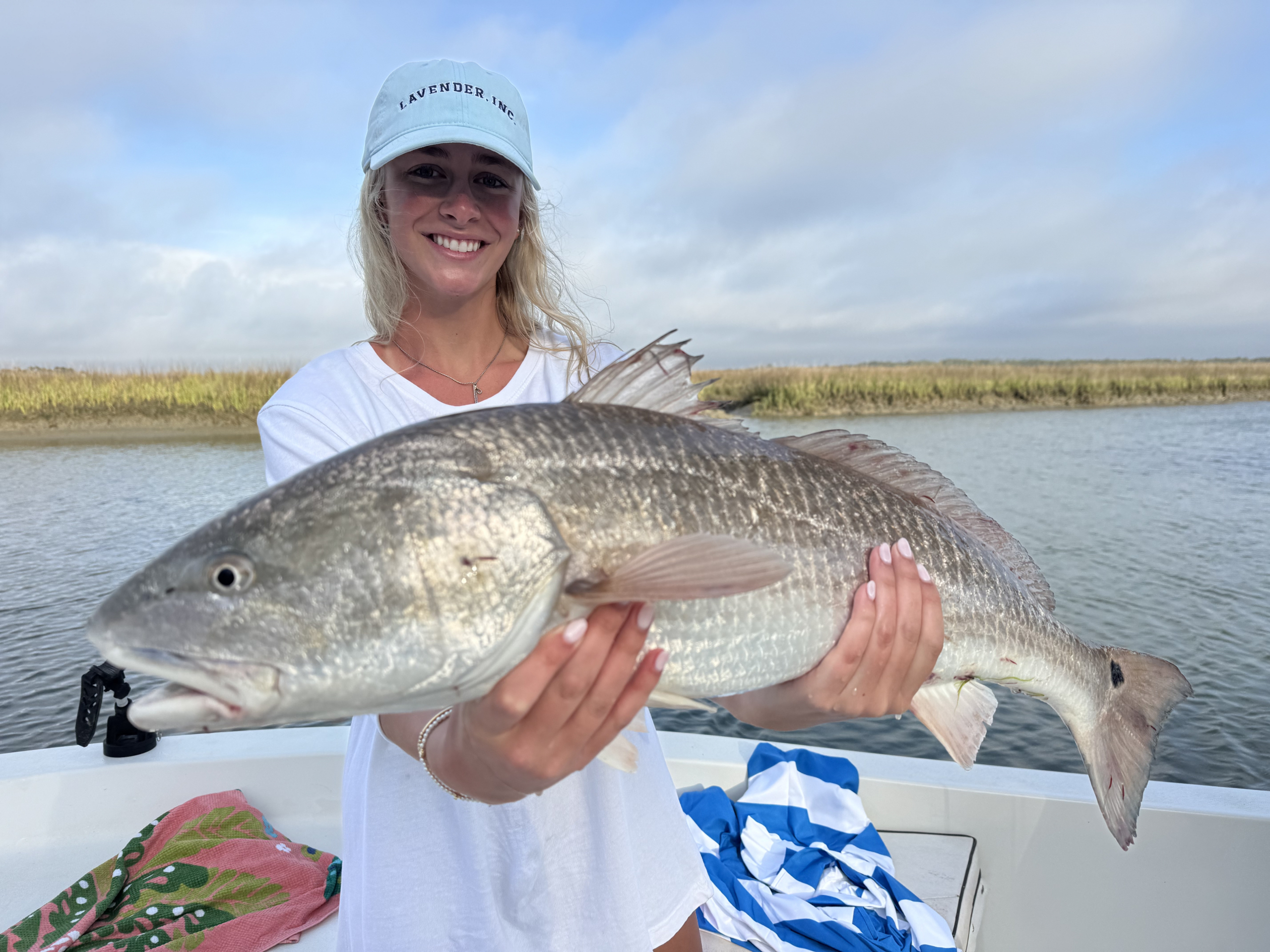
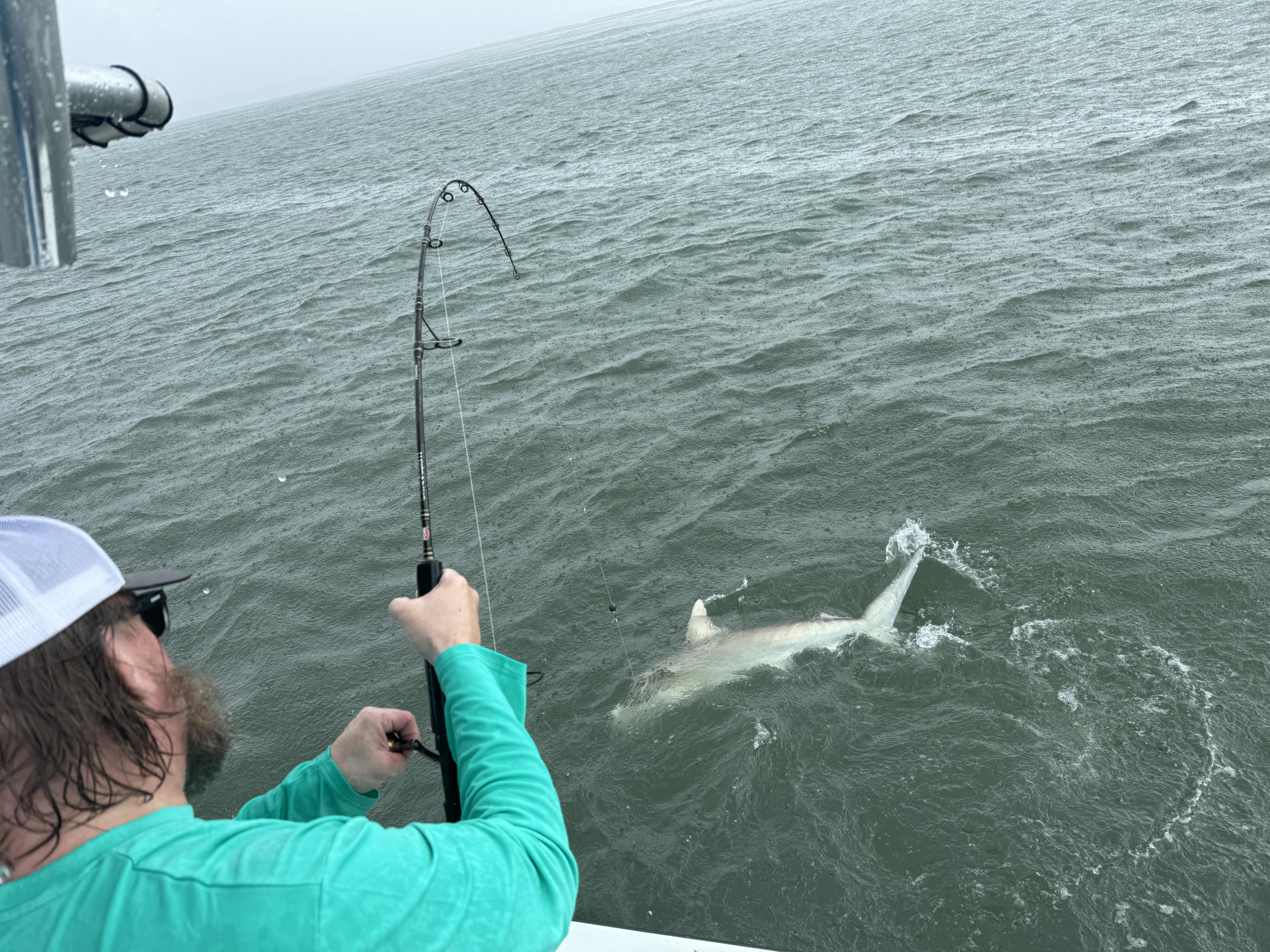
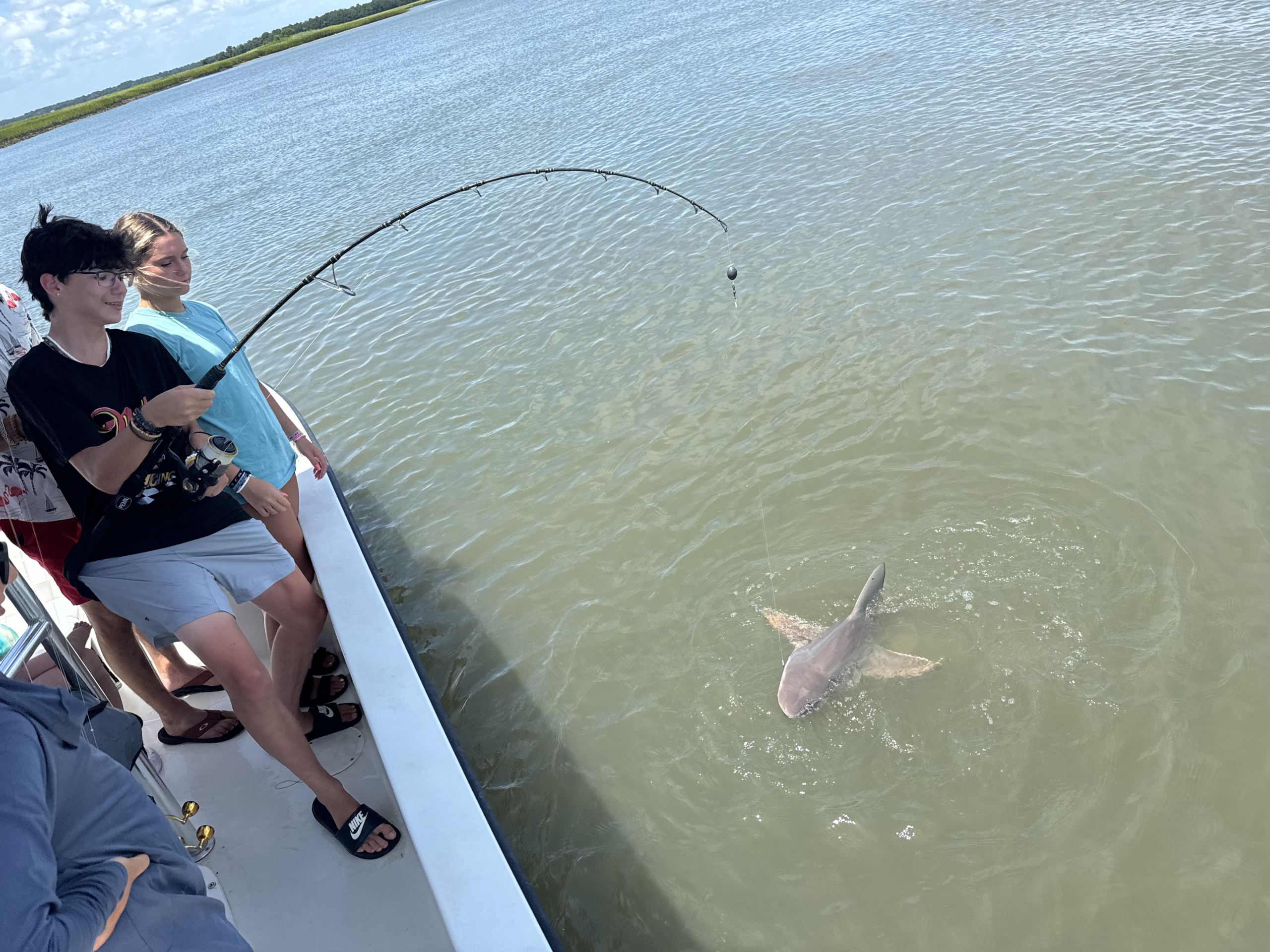
On April 7th, my customers caught dozens of redfish, black drum, bonnethead sharks, and a giant cownose ray on peeler crabs. If peelers are unavailable, head-on shrimp and hard crabs can still produce fish, but nothing beats a peeler this time of year.
Mud minnows drifted over oyster reefs, and structures are also producing seatrout, redfish, and flounder. Soft plastics jigged along deeper cut banks near oysters can work as well.
Still, I try not to leave the dock without some type of crab this time of year.
For anglers looking to get offshore without running too far, the nearshore reefs are full of action right now.
Bluefish, bonita, false albacore, and Spanish mackerel are chasing bait through the upper water column. Below them, weakfish, redfish, black drum, sheepshead, and black sea bass hold tight to the structure.
We have been casting small metal jigs in the 30 to 40 gram range and catching just about everything out there.
Cast far and retrieve quickly for the pelagic species, or jig near the bottom for the reef fish.
On recent ocean trips, we have also seen migrating sea turtles and large schools of cownose rays gliding just under the surface.
Experience the Wild Side of the Lowcountry
Spring on the water offers a different perspective on Folly.
The marsh is active. The tides are full of life. Every trip reveals something new, whether it is a school of redfish working a flat or a migrating turtle breaking the surface offshore.
If you want to experience that side of the island, a local charter is one of the best ways to do it.
Capt. Gates runs guided trips exploring the creeks, marshes, and nearshore waters around Folly Beach. You can learn more about his charters or plan a trip on the water here.
Related Articles
Related Posts

Peaceful & Beautiful
This was my families first time at the ocean and I will never forget the look of joy on my youngest daughter’s face the moment the waves first came up on her feet. The beach was not over crowded, was clean, and was great for relaxing, swimming, and collecting seashells. There is a long pier for fishing off of and it is a beautiful sight at night. The town atmosphere was a nice mix between relaxing and having a good time and can work for the over 21 crowd as well as for families with small kids. There are plenty of great food stops and cute shops.
Fantastic & Peaceful
This beach is very relaxing and a great place to chill out. We saw several dolphins and enjoyed walking on the fishing pier. I would consider staying on the beach here next time we are in Charleston instead of downtown.
Cute, Calm & Peaceful
First time visitor to Folly Beach–loved it! Quiet and peaceful with many trees left on island.